
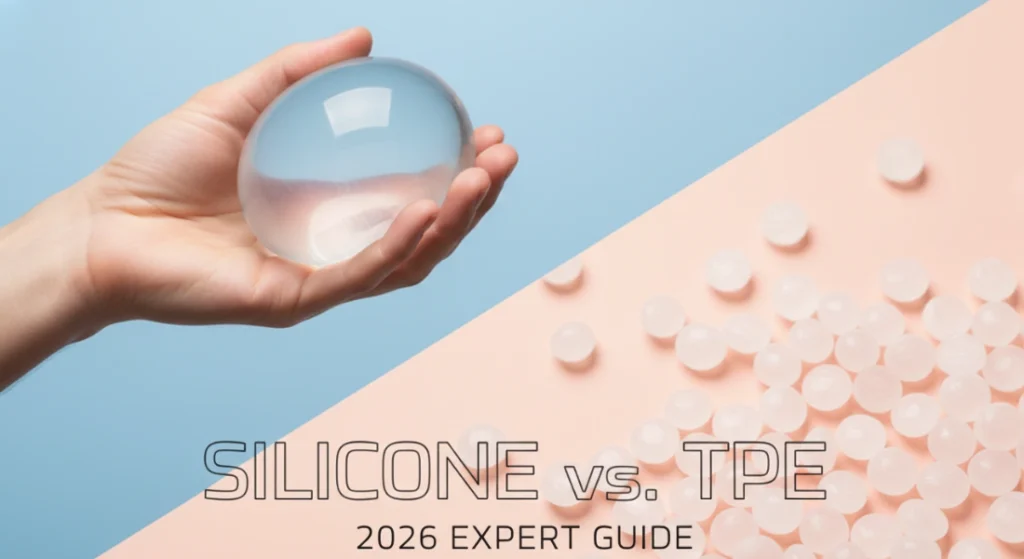
Silicone vs. TPE Sex Dolls:The Ultimate 2026 Material Guide

Silicone and TPE sex dolls side by side showing differences in material texture, body softness, and surface detail

The 2026 Authoritative Guide to Material Realism, Safety, and Long-Term Care

Introduction: Why Material Science Defines Realism in 2026

In the high-end sex doll industry, realism does not begin with appearance—it begins with material science.As manufacturing technologies mature in 2026, Thermoplastic Elastomer (TPE) and platinum-cured silicone have both reached advanced levels of realism, durability, and safety.

While both materials can produce lifelike companions, their chemical structures, physical behavior, and long-term maintenance requirements lead to fundamentally different ownership experiences.This guide is written from a manufacturer’s perspective to help buyers, collectors, and first-time owners make an informed, future-proof decision.

Understanding the Core Difference Between Silicone and TPE

Chemical Composition — The Root of All Differences

TPE (Thermoplastic Elastomer) is a processed polymer material known for its exceptional flexibility and elasticity.
It can stretch six to ten times its original length, making it ideal for creating soft, deformable body areas that closely resemble human fatty tissue. TPE is recyclable and environmentally friendly, but its thermoplastic nature makes it inherently porous.
tpe material photo 2026

Silicone, specifically modern platinum-cured silicone, is a chemically stable, medical- or food-grade material.
Its molecular structure is cross-linked during curing, making it non-porous, insoluble, heat-resistant, and chemically inert. Unlike TPE, silicone cannot be recycled, but it maintains structural and visual stability over decades.

silikon material photo 2026

Key takeaway:
TPE prioritizes softness and flexibility, while silicone prioritizes chemical stability and longevity.

Appearance and Tactile Realism

Touch, Elasticity, and Body Movement

TPE is widely regarded as the softest and most “fleshy” material available.
Breasts, buttocks, and thighs exhibit natural wobble and compression, closely mimicking real human tissue during movement or physical contact.

Silicone, by contrast, has a firmer baseline density. However, modern upgrades—such as gel-filled breasts and buttocks—allow silicone dolls to achieve a jelly-like softness that approaches TPE while maintaining superior shape retention.

Visual Detail and Aesthetic Precision

Silicone excels in fine visual detailing.
It allows for permanent makeup, visible veins, muscle definition, and sharp facial contours that do not fade easily over time.

TPE offers a smoother, more uniform surface.
Its makeup and painted details typically require touch-ups every 3–6 months, and the material is more susceptible to staining from dark clothing.


Safety, Odor, and Hygiene Considerations

Porosity and Hygiene Risk

TPE is a porous material, meaning it can retain moisture inside internal cavities.
If drying is incomplete after cleaning, mold growth can occur over time.

Silicone is non-porous, making it naturally resistant to bacteria, odors, and staining.
This makes silicone significantly easier to disinfect and safer for long-term hygienic use.

Odor and Skin Sensitivity

Silicone is odorless and hypoallergenic, making it ideal for users with sensitive skin.
TPE may retain a mild manufacturing odor due to its thermoplastic nature. Some manufacturers add artificial scents, but many professionals avoid additives to reduce allergy risks.

Cost, Value, and Long-Term Investment

TPE — Affordable Realism

TPE dolls are more economical to produce, making them accessible to beginners or collectors who prefer variety in body styles.
However, their long-term value depends heavily on proper maintenance and storage.

Silicone — Premium Longevity

Silicone dolls require higher upfront investment due to expensive raw materials and complex molding processes.
In return, they offer exceptional durability, resistance to aging, and stable aesthetics, even under prolonged use.

Professional Maintenance and Care Guidelines

Proper care determines whether a doll lasts three years or fifteen.

  • Initial Cleaning: Wash new dolls with warm water under 38°C and mild soap

  • Powder Rule: TPE dolls must be powdered after drying to prevent stickiness

  • Storage: TPE dolls should be stored flat or in original packaging to avoid deformation

  • Environment: Silicone dolls tolerate environmental changes better but should still avoid corrosive materials

Recommended Choice for Soft Realism — XLifeDoll Medical-Grade TPE Series

For users who prioritize maximum softness, natural body movement, and a lifelike tactile experience, XLifeDoll’s Medical-Grade TPE series represents one of the most refined TPE implementations available in 2026.

Unlike standard commercial TPE, XLifeDoll uses a medical-grade thermoplastic elastomer formulation that is engineered for improved elasticity, skin resilience, and surface stability. This upgraded material allows the body to stretch and compress naturally while maintaining structural integrity over long-term use.

Why Medical-Grade TPE Makes a Difference

XLifeDoll’s Medical-Grade TPE is designed to address the traditional limitations of TPE while preserving its core advantage—softness.

Key material characteristics include:

  • Enhanced Elasticity:
    The material stretches smoothly without excessive surface stress, creating realistic movement in the breasts, hips, and thighs.

  • Improved Skin Recovery:
    After compression or bending, the surface returns to its original shape more consistently, reducing long-term deformation.

  • Reduced Odor Profile:
    The refined formulation minimizes residual manufacturing odor without relying on artificial fragrances or additives.

  • Beginner-Friendly Handling:
    The softer density and balanced weight distribution make these dolls easier to reposition, clean, and store—especially for first-time owners.

Who Should Choose XLifeDoll Medical-Grade TPE?

This series is especially well suited for:

  • First-time buyers seeking a realistic and forgiving material

  • Users who value cuddling, softness, and tactile realism

  • Owners who want variety in body styles without premium silicone pricing

  • Collectors looking for a balanced option between affordability and realism

For users who appreciate the visual precision of silicone but prefer the tactile qualities of TPE, XLifeDoll also offers hybrid configurations, pairing a highly detailed silicone head with a Medical-Grade TPE body.

Material Care Transparency

As with all TPE-based dolls, proper care is essential.
XLifeDoll provides clear care guidelines, including:

  • Thorough drying of internal cavities after cleaning

  • Regular powdering to maintain surface texture

  • Proper storage to prevent long-term deformation

When maintained correctly, Medical-Grade TPE offers a soft, natural experience that remains consistent over years of ownership.

Expert Note

Medical-Grade TPE is not about cutting costs—it is about optimizing softness without sacrificing safety or durability.
For users whose definition of realism begins with touch, XLifeDoll’s Medical-Grade TPE series stands as a confident, future-proof choice in 2026.

Frequently Asked Questions (FAQ) — 2026 Expert Insights

Q1. Which material offers the softest and most realistic touch?

A:TPE delivers the softest, most elastic feel available today. Its ability to stretch and compress allows for natural body movement and tactile realism. Silicone can approach this softness with gel upgrades but remains structurally firmer.

Q2. Are TPE dolls harder to keep hygienic?

A:Yes. TPE’s porous structure requires thorough drying after every cleaning session. Silicone’s non-porous surface makes it significantly easier to disinfect and maintain long-term hygiene.

Q3. What lubricants are safe for each material?

A:TPE is compatible with both water-based and silicone-based lubricants.
Silicone dolls should primarily use high-quality water-based lubricants to preserve surface integrity over time.

Q4. How long do makeup and skin details last?

A:Silicone offers permanent makeup and long-lasting aesthetic details.
TPE makeup typically lasts 3–6 months and may require touch-ups. TPE is also more prone to staining from dark fabrics.

Q5. Is there a solution for users who want silicone realism with TPE softness?

A:Yes. Hybrid dolls, featuring a silicone head and a TPE body, combine the best of both materials. This option is popular among collectors seeking visual precision and tactile softness simultaneously.

Conclusion: Choosing the Right Material in 2026

Choosing between silicone and TPE is not about which material is “better”—it is about which ownership experience fits your priorities.

Choose TPE if you value softness, flexibility, and a lifelike touch

Choose Silicone if you prioritize hygiene, durability, and long-term aesthetics

Choose Hybrid if you want a balanced solution without compromise

In 2026, understanding material science is no longer optional—it is the foundation of a satisfying, realistic, and responsible ownership experience.

Leave a Comment

Your email address will not be published. Required fields are marked *

Scroll to Top