
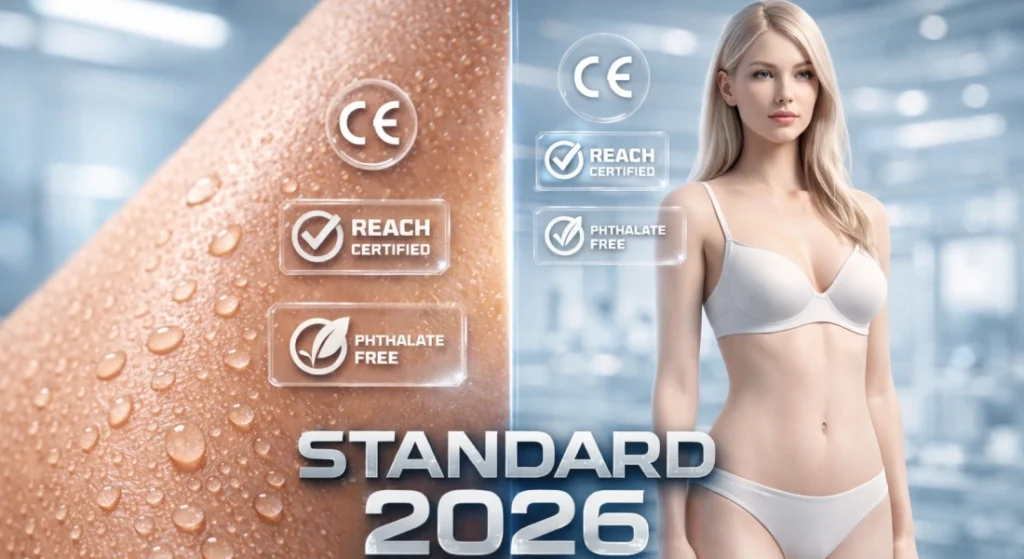
Executive Summary
The Sex Doll Safety Standard 2026 defines a unified, evidence-based framework for evaluating material safety, structural integrity, hygiene, and long-term user health in the modern adult companion doll industry. This document is designed as an independent reference standard, aligned with prevailing EU and U.S. regulatory principles, material science consensus, and post-market risk observations from 2020–2025.
The objective of this standard is not to promote products, but to establish minimum acceptable safety thresholds and best-practice benchmarks for manufacturers, distributors, reviewers, and consumers.
1. Scope and Applicability
This standard applies to:
- Full-size and partial-body adult companion dolls intended for intimate physical interaction
- Products manufactured from silicone, thermoplastic elastomer (TPE), or hybrid polymer systems
- Dolls sold in the EU, United States, and comparable regulatory jurisdictions
This standard does not cover inflatable products, novelty toys, or disposable items.
2. Terminology and Definitions
- Medical-Grade / Platinum Silicone: Silicone elastomers cured via addition (platinum) catalysis, leaving no volatile byproducts.
- TPE (Thermoplastic Elastomer): Physically cross-linked polymer blends requiring softening oils to achieve elasticity.
- Biocompatibility: The ability of a material to contact human skin or mucosa without causing irritation, sensitization, or toxicity.
- Body-Safe (Industry Term): Informal designation indicating the absence of known CMR substances; not a legal certification.
3. Material Safety and Biocompatibility Standards
3.1 Silicone Requirements
Premium silicone dolls must meet the following criteria:
- Platinum-cured (addition cure) silicone only
- Non-porous, hydrophobic surface structure
- No detectable VOC off-gassing under normal use conditions
- Thermal stability exceeding 200°C
- Silicone materials meeting these criteria are considered chemically inert and suitable for long-term skin contact.
3.2 TPE Requirements
TPE sex dolls must meet stricter formulation controls due to inherent porosity:
- Phthalate-free softening systems
- Hypoallergenic compound formulation
- Controlled oil migration rates
- No use of recycled industrial regranulate
Due to porosity, TPE is classified as conditionally body-safe, contingent on proper maintenance.
4. Regulatory Alignment (2026)
This standard aligns with, but does not replace, the following frameworks:
- EU REACH Regulation: Restriction of hazardous substances and SVHCs
- RoHS Directive: Heavy metal and hazardous compound limits
- CE Marking Principles: Mechanical and consumer safety conformity where applicable
- EN 71-3 Migration Limits: Heavy metal migration benchmarks
Note: Adult dolls are not uniformly classified across jurisdictions. This standard adopts the most conservative applicable thresholds.
5. Structural and Mechanical Safety
5.1 Internal Skeletons
- Skeletons should be stainless steel or reinforced engineering polymers
- All joint interfaces must be padded and isolated from external skin layers
- No sharp edges or stress concentration points permitted
5.2 Electronic Systems
For dolls with heating or AI modules:
- Mandatory thermal cut-off sensors
- Electrical isolation from fluid-exposed zones
- Low-voltage power systems only
6. Hygiene and Maintenance Protocols
6.1 Cleaning Standards
- Mild soap or dedicated antimicrobial toy cleaners only
- No aldehydes, phenols, or solvent-based agents
6.2 Moisture Control
- Complete drying of porous materials required after each use
- Airflow-assisted drying recommended for TPE
6.3 Material Preservation
- Renewal powder required for TPE surfaces
- Silicone requires no powder but benefits from periodic surface inspection
7. Risk Classification Summary
| Risk Category | Silicone | TPE |
|---|---|---|
| Chemical Migration | Minimal | Moderate |
| Bacterial Retention | Low | Elevated |
| Maintenance Dependency | Low | High |
| Long-Term Stability | Excellent | Variable |
8. Compliance Levels
- Minimum Compliance: Meets material and hygiene thresholds
- Recommended Compliance: Exceeds thresholds with enhanced controls
- Non-Compliant: Use of restricted substances or unsafe construction
9. Update Cycle
This standard is reviewed annually to reflect:
- Regulatory updates
- Material science advances
- Documented post-market risks
Current version: 2026.1
10. Conclusion
The Sex Doll Safety Standard 2026 establishes a neutral, transparent baseline for safety and quality in a rapidly evolving industry. Products meeting this standard prioritize user health, material integrity, and long-term reliability over cost-driven compromises.